
Can Broken Double Glazed Units Be Replaced Without Replacing the Whole Door?
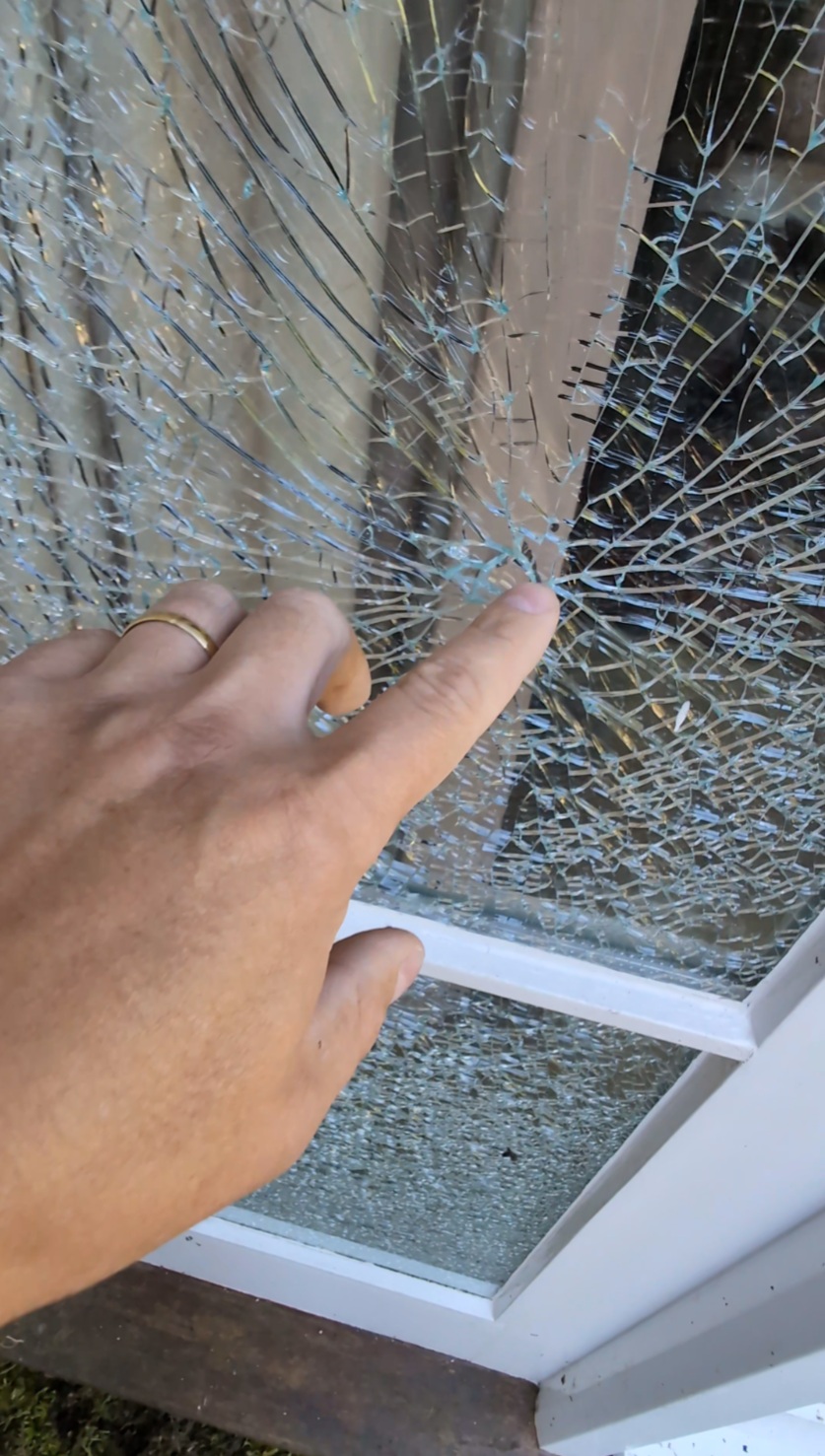
Real repair carried out on Exmoor, serving North Devon, West Somerset and Mid Devon.
One of the advantages of working with timber windows and doors is that they are designed to be repaired rather than thrown away. Recently we were contacted by a homeowner on Exmoor who had a broken double glazed unit in a timber entrance door. Thankfully, the surrounding joinery was still in excellent condition, making this a perfect example of why quality timber joinery can provide decades of service.
The customer had been given our details by the previous owners of the property, who recommended us for future joinery and glazing work. Recommendations like this are always appreciated and are one of the ways many of our customers first get in touch.
Can a broken double glazed unit be repaired?
No, but it can usually be replaced relatively easily.
When the customer first contacted us, they emailed over a photograph of the damaged glass. Modern technology makes this process much easier than it once was. A clear photograph and a telephone conversation often allow us to understand the problem before we even visit site.
In this case it was immediately obvious that the outer pane of the sealed unit had shattered while the inner pane remained intact. This meant the property was still secure and weatherproof, giving us time to survey the job properly, order a new sealed unit and arrange a convenient installation date.
If a broken unit leaves your property insecure or exposed to the weather, we can also discuss temporary boarding-up to make the area safe until the replacement glass arrives.
Why do double glazed units sometimes break?
Homeowners are often surprised when a pane of glass appears to shatter without any obvious cause. There are actually several reasons why this can happen.
Sometimes large differences in temperature across the glass can place the pane under stress. On other occasions, a tiny manufacturing imperfection within toughened glass can eventually cause it to fail many years later. Frames and glazing also naturally expand and contract throughout the seasons, and if a sealed unit is under pressure within its frame this can occasionally contribute to breakage.
One of the most common explanations, however, is a small impact that wasn't noticed at the time. A bird strike or a stone thrown up by a lawnmower can create a tiny defect that develops into a larger crack days or even weeks later.
Looking at this particular door and speaking with the homeowner, we felt a bird strike was the most likely cause, although it is often impossible to know for certain.
The important point is that a broken pane does not automatically mean there is anything wrong with the surrounding timber door.
Do I need to replace the whole timber door?
Almost certainly not.
One of the great strengths of well-made timber joinery is that individual components can usually be repaired or replaced when required.
It was actually very enjoyable to work on another joinery company's work. There was something satisfying about helping extend the life of joinery that another craftsman had made twenty years ago. It felt less like competing with another company and more like a shared effort to create something that was built to last.
I was honest with the customer that replacing a sealed unit can initially feel like an expensive repair. However, it's helpful to think of double glazed units as a service item rather than something that lasts forever.
Depending on their exposure to the weather, quality of manufacture, installation and orientation, sealed units might last anywhere from around 10 to 30 years or more. The timber door surrounding them, if properly maintained, has the potential to last for many decades. This particular joinery was installed in 2006, so it's reaching the sort of age where seeing the occasional failed sealed unit isn't unusual.
Rather than replacing an entire door, you're often simply renewing one component while keeping the original joinery in service.
Why does replacing glass in timber doors cost more than uPVC?
This is a question we're sometimes asked.
Modern uPVC windows and doors often use clip-in glazing beads that can usually be removed relatively quickly.
Traditional timber joinery is different.
Paint lines, glazing sealants and silicone often need to be carefully cut away before the beads can be removed without damaging them. Every stage takes a little more care because preserving the existing joinery is usually the priority.
The advantage is that timber can normally be repaired if required.
Even if glazing beads become damaged during removal, our workshop is able to machine replacement beads that closely match the existing profiles. For this particular job I was able to save and reuse the original beads, which is always my preferred approach, although I had replacement beads prepared in advance just in case.
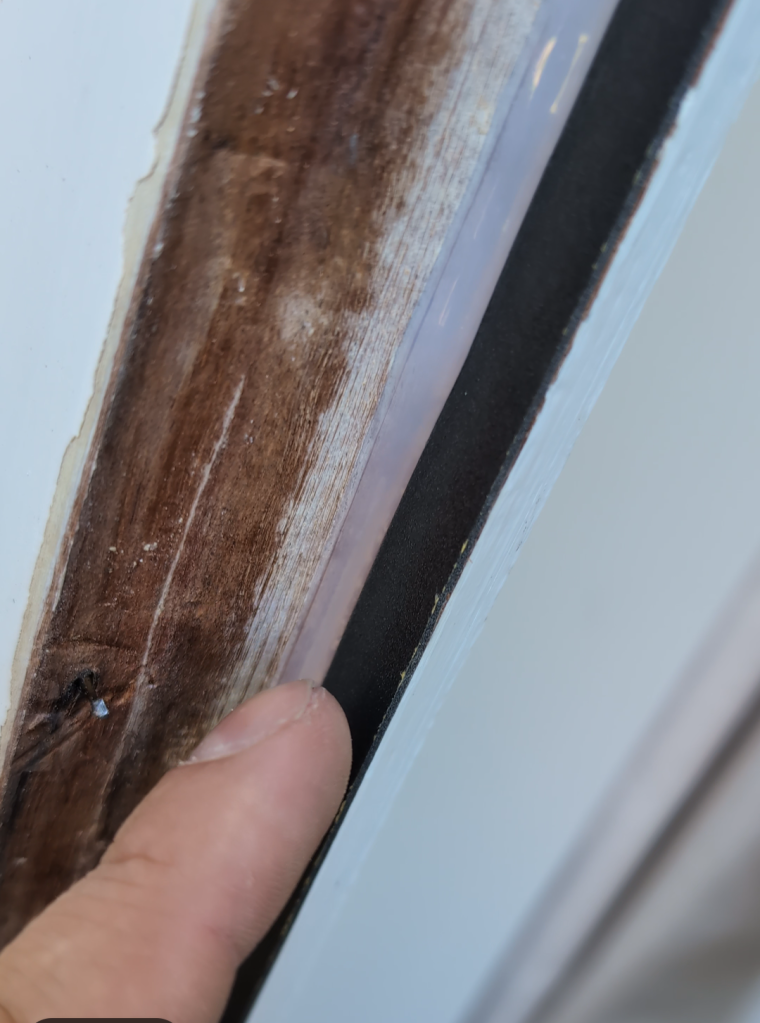
Replacing the glass also gives us a chance to inspect the joinery
During our survey I noticed that several other double glazed units on the south-facing elevation had started to mist internally.
The homeowner asked whether they all needed replacing immediately.
My advice was no. It wasn't an emergency and they could replace them at a time that suited them.
Provided both panes remain intact and the glass isn't loose, misted sealed units don't usually present a safety issue. While their insulation performance will have reduced slightly, replacing them purely to save money on heating bills is unlikely to provide a quick financial return.
If it were my own home, I'd replace them when the appearance started to bother me or when I was already carrying out other maintenance.
However, replacing failed units also provides an excellent opportunity to inspect the timber, renew sealants where required and deal with any small maintenance issues before they become larger repairs.
In many ways it's an opportunity to give the window or door a service while we're already working on it.
Can you replace just the broken pane?
This was one of the most interesting conversations we had during the day.
The customer had assumed we would simply replace the outer pane that had broken.
It's a perfectly reasonable question.
Unfortunately, that's not how modern double glazing is manufactured.
A sealed unit is made in the factory as a complete assembly, with two panes of glass permanently bonded together around a spacer bar containing moisture-absorbing desiccant. Once that factory seal has been broken, it can't be recreated on site to the same standard.
For that reason, the correct repair is to replace the complete sealed unit rather than just one pane.
What happens when we replace a sealed unit?
Once the replacement unit had been manufactured, we returned to the property and carefully protected the surrounding area before starting work.
The glazing beads were removed as carefully as possible before the damaged sealed unit was lifted out safely and wrapped for disposal. The glazing rebates were then cleaned thoroughly, with old sealants removed and any rough areas lightly sanded where necessary.
The new energy-efficient sealed unit was installed with the low-emissivity coating facing the correct direction before being bedded and sealed using the appropriate glazing system for the door. The original glazing beads were then reinstalled and the perimeter carefully sealed.
Finally, the work area was thoroughly cleaned and inspected for any remaining fragments of glass.
Although we always take great care during our clean-up, we still advise homeowners to remain vigilant afterwards, particularly if children or pets are present, just in case a small fragment has found its way somewhere unexpected.
Another enjoyable day on Exmoor
One of the nicest parts of the day came after the repair had been completed.
The customer kindly made me a coffee while we chatted about life on Exmoor, the swarms of bees that visit the area and just how harsh the local weather can be on buildings.
It's conversations like these that remind us why we enjoy working across Exmoor, North Devon, Mid Devon and West Somerset.
We also really appreciated that the customer settled their invoice promptly. For a small family business, it genuinely makes a difference and helps us continue providing the level of service we'd like to be known for.
Shortly afterwards they also left us this review:
"Excellent work. A perfect mend of a broken window and all left clean and tidy. Highly recommended."
We're always grateful when customers take the time to leave feedback.
Looking after timber windows and doors for the long term
One of the reasons we enjoy carrying out this type of work is that we're not simply changing a piece of glass. Every replacement gives us an opportunity to inspect the joinery, deal with any small issues and help the window or door continue giving good service for many years to come.
At GS Haydon & Son we don't believe every problem needs a complete replacement. If an existing timber window or door can be repaired sensibly and economically, we'll always tell you. Sometimes replacing the glass is all that's needed to give many more years of service.
Need a replacement double glazed unit for your timber window or door?
If you have a broken or misted sealed unit, it doesn't necessarily mean you need a completely new window or door.
We're happy to advise whether replacing the glass is the most sensible option and, where appropriate, carry out the repair while preserving as much of the original joinery as possible.
If you're based in North Devon, Mid Devon, Exmoor or West Somerset and would like us to take a look, please get in touch. Even if all you have initially is a photograph, that is often enough for us to begin advising on the best way forward.