
Is Accoya Worth The Premium Price?
If I send an email or pick up the phone to my supplier now, Accoya will be the most expensive timber I can order for your wooden windows or doors. So why is Accoya popular? Is it simply cynical sales? An opportunity for a company to up-sell you, and end up with something you never needed in the first place? I don't believe that's true, and let me tell you why. I've got no skin in the game, if for instance you want Oak, we'll make you beautiful Oak joinery. But here's why I strongly recommend you ask us to reach for the Accoya stack first. This is my view of me as an independent joiner. Accoya don't pay me anything or give me any discounts and I will share with you some insights that you just don't get from the Accoya marketing machine. Yes we are trained by Accoya to ensure we get the best possible performance and this is reflected by our listing on the Accoya Website but I don't have to use the timber.
Oak: The Cultural Favourite vs. The Practical Reality
Firstly you should be aware that Accoya is around the same price as Prime Grade European Oak. Now it's easy to assume when faced with this situation we should choose the Oak. After all, Oak is deeply interwoven into our history, culture, built environment and a symbol of national strength, endurance, and longevity. And although Oak can make a beautiful entrance door and unique joinery it's not always the perfect choice for external joinery such as windows and doors. Let's compare oak first.
Normal Prime Grade Oak is typically too dry for external joinery. We instead purchase air dried oak for external joinery. This is even more expensive! This ensures a more appropriate moisture content and reduces issues. However, even with this step taken, Oak will still absorb moisture readily and has a tendency to swell significantly (think doors and windows sticking, dragging and jamming shut) along with warping and cracking. Now, Oak can still be used successfully, we pride ourselves in making good quality Oak joinery. But if you want painted joinery, Accoya is just so much better.
Accoya is much more stable than Oak. So much so that even if Accoya's environment were to change form a dry summer to a soaking wet British winter it will typically change in size by less than 1%. No other timber in widespread use for external joinery comes close, with Oak being one of the worst offenders for moisture movement.
It also take so long for a majestic Oak to tree to grow and mature. And perhaps we want to leave more of our Oaks in the ground and part of the environment. On the other hand, Accoya is plantation grown and ready to fell within 25 to 30 years. This means we can have much more Accoya available much more quickly. This fast growth and that it ready to harvest quickly also has another benefit.
Accoya is more durable than Oak. Accoya sits in Class 1 with a durability claim of a minimum of 50 years above ground and 25 years in ground contact. Oak sits in class two, still very durable but not able to match Accoya. So here is this very interesting comparison. The trees required to create Accoya are ready in 30 years and it lasts for 50 years when used to make joinery and potentially much longer with maintenance. Whereas Oak will fail more quickly and take 80 to 200 year to grow to a size suitable for joinery.
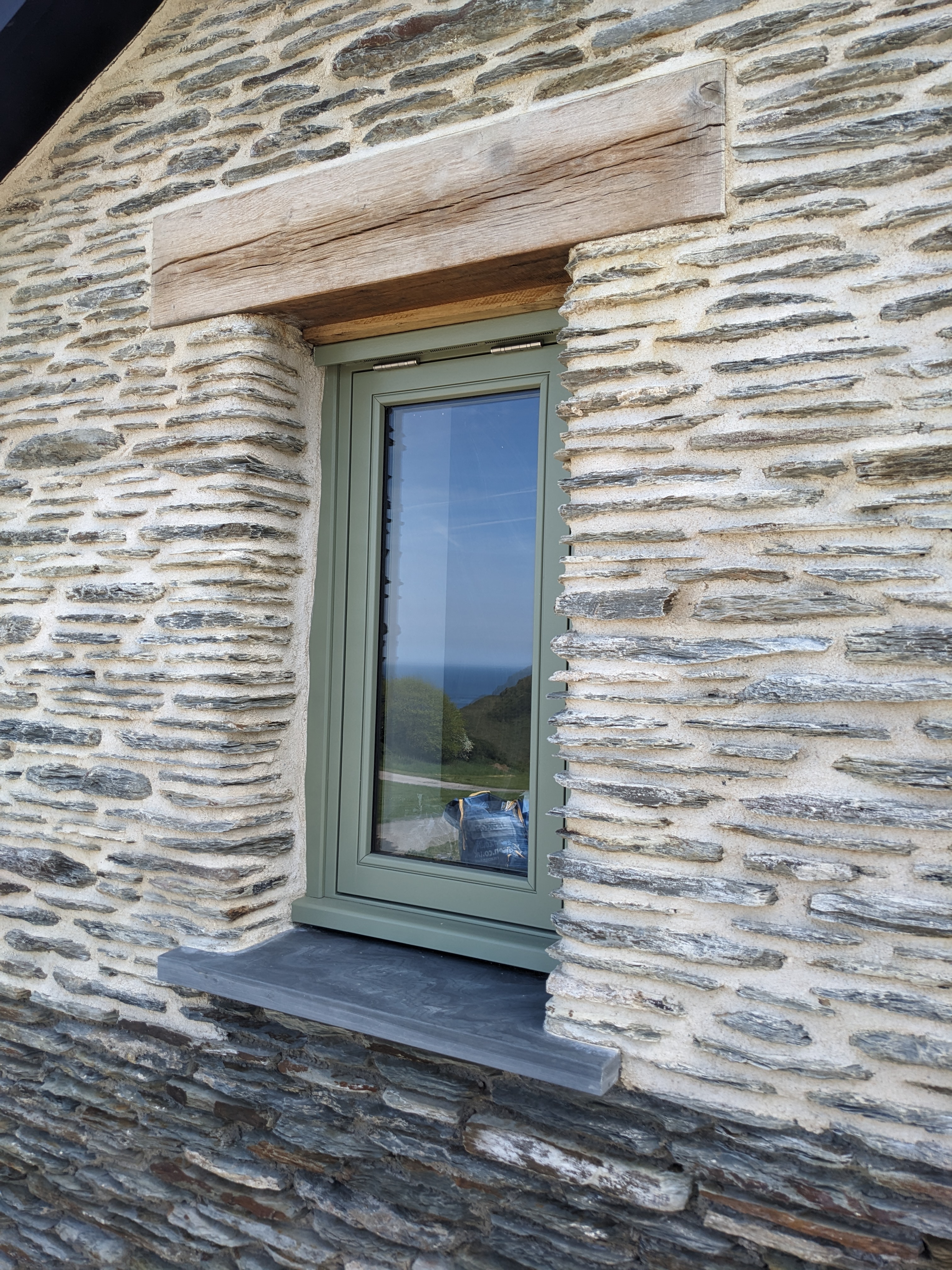
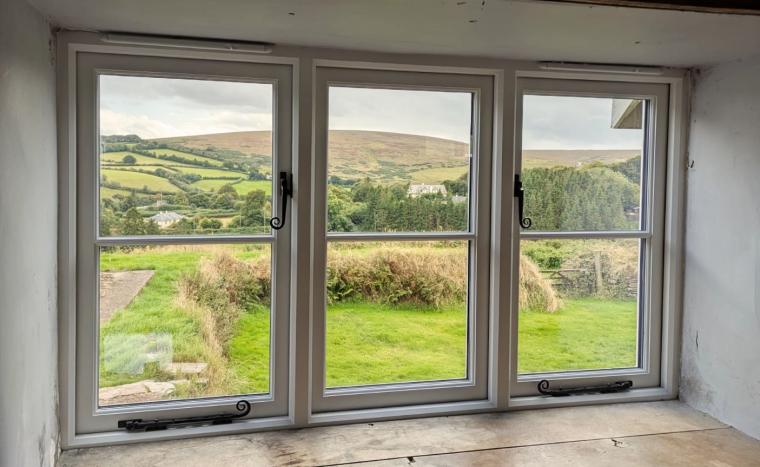
Accoya window shown below.
The "Pine" Question: Science over Species
You may notice that I said "the trees required to create Accoya". That's because Accoya isn't a tree, it's a brand name, Accoya starts its journey as Radiata Pine. I can hear you recoiling through the screen and asking "Why should I pay a premium price for pine?". I get it, I had the same reaction when the cost was first disclosed to me, but over the past 12 years I have more than accepted it's premium price. So Radiata pine as a timber, is not suitable for external joinery. However, when radiata pine is converted into Accoya we end up in a very different situation. Radiata pine is converted through a non-toxic process called as acetylation. This process fundamentally alters the cellular structure of the wood, changing fast-grown and non-durable softwood into a highly durable, and dimensionally stable timber. This treatment is not like a traditional process of timber treatment. Traditional processes barely penetrate the timber, whereas the process of acetylation goes straight through the timber. You can cut, plane or drill trough Accoya and every section will have the same level of durability.
"But what if I choose a cheaper hardwood?" Sure, many of our customers do this. Something like Utile or Idigbo are cheaper and still very much an appropriate choice for external joinery. Here you will drop to durability class 3. These are from West Africa and there are differing views on if industry should even be using these timbers. These timbers are brought into the UK under the UK Timber Regulation also known as UKTR. This prohibits placing illegally harvested timber on the market. A common critique of Idigbo is that it is listed as a vulnerable species. What is incredibly frustrating is that this assessment and confirmation for Idigbo as Vulnerable stretches back to 1998! What I can tell you is both Utile and Idigbo are still both widely available and competitively priced. They are also available in a greater selection of widths and thicknesses. This may not always be an issue for a joinery project but it's worth being aware of. Ultimately the ethical choice will come down to our client. If you pay the premium for Accoya you will be sure that there are no concerns of the vulnerability of it as a species.
"But what if I choose pine (European Redwood) surely that's ok?" This one breaks my heart. If there is one timber that contributed to breaking the reputation of external joinery, it's this one. This is the timber that was used for hundreds of years to make external joinery and it did a very, very fine job. Then it turned rather sour. Perhaps this can be traced to the changes post WW2, but regardless of cause the quality took a nosedive. The heartwood of European Redwood is still Class 3. This is the darker timber that turns a redish brown with UV light exposure. Sadly the timber now comes with so much sapwood ( think pretty much half the board) which is completely perishable. It is possible to treat it with preservative but the process is not as effective as the acetylation that Accoya goes through. Standard pressure treatment is almost like a coat of paint—it only sits on the surface. If I cut a mortise or tenon into treated Redwood, I’m exposing the 'raw' perishable middle. With Accoya, the treatment is 'all the way through' the core If joinery is cut drilled, sawn or planed the initial preservative treatment is removed or massively reduced. If your joinery is completely sheltered and doesn't get wet and not exposed to swings of humidity, this could still be an option.
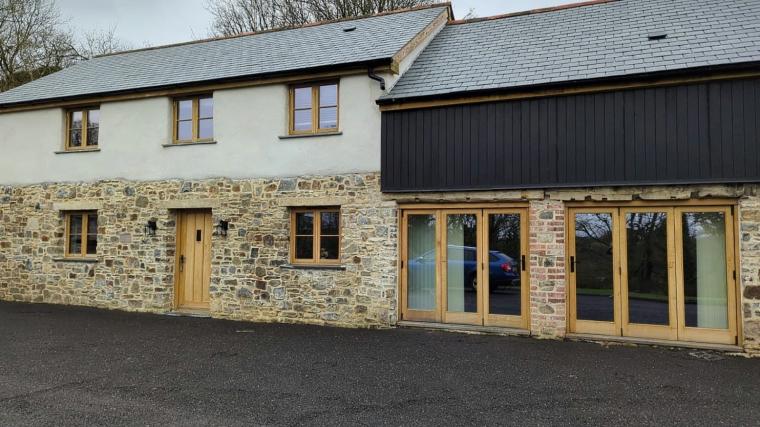
Oak Joinery Below
The Workshop Reality: Acids and Ironmongery
Considering the premium price are there any drawbacks of using Accoya aside from the price? It's really important to use stainless steel or high quality brass wherever possible as the acidic nature of Accoya will lead to corrosion. You may need to overcome the fact that Accoya is a fast grown pine. I can appreciate that this seems like you're being somehow short-changed. But think of it as a galvanised chassis under the paintwork of your joinery. I will also say I think it is an ugly timber. If you want to choose a timber for it's visual appearance with a clear or translucent finish, Accoya is not good. This is where you can choose an attractive hardwood timber entrance door and use painted Accoya for your painted windows and doors.
So we return to original question. Is Accoya worth the premium price? Do you want Class 1 durability? Do you want to be sure that the timber used in your joinery is from a source where there is no doubt about it's sustainability? Do you want the lowest chance possible that your joinery will stay stable and not swell and stick? If the answer is yes then Accoya is a great choice and we would encourage you to use it.
If you’re planning a project and would like to explore which material is most appropriate for your property, I’m always happy to have an initial discussion.
You can reach me on 01769 572134 or 07449 960116